



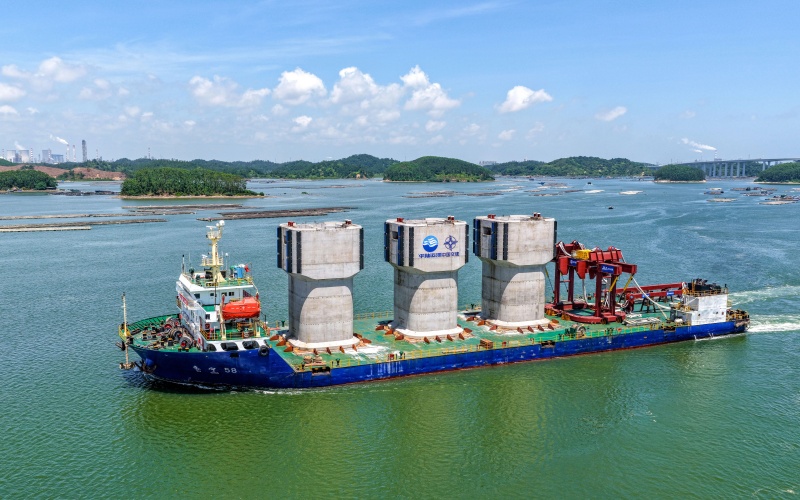
平陆运河1号锚地项目预制沉箱正在出运
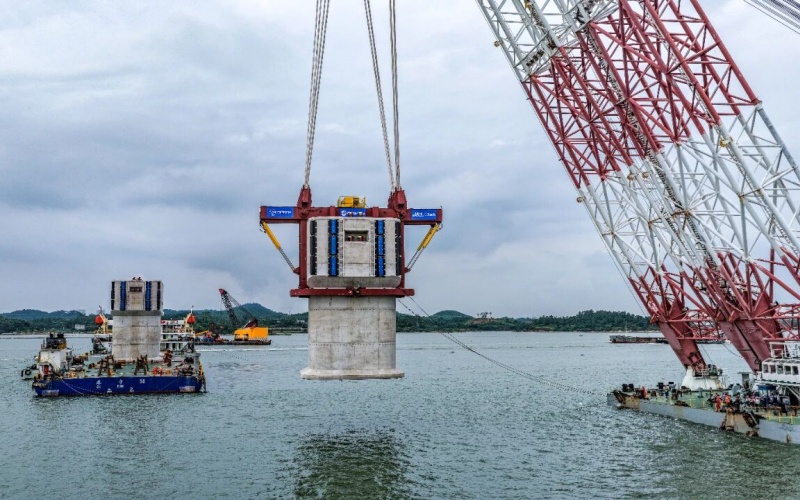
The first caisson of the Pinglu Canal No. 1 Anchorage Project is positioned on water
The shipping and installation process covers multiple stages, including onshore loading, offshore towing, and underwater positioning. The operation area is an unobstructed open water zone with variable sea conditions and high risks in navigation assurance, imposing extremely high requirements on construction precision and refined management.In the face of these challenges, the Pinglu Canal construction management team adopted the airbag lifting and transverse-longitudinal shifting transportation technology to safely transport the caissons to the quay front. The caissons were then lifted onto barges by crane vessels and towed by self-propelled deck barges to the anchorage area for positioning and installation. Addressing the difficulties posed by the large size, heavy weight, and uneven force distribution of irregular components, the team innovatively used a specially designed lifting frame independently developed by them. This effectively solved the problem of balancing control during lifting, significantly enhancing operational safety and positioning accuracy.
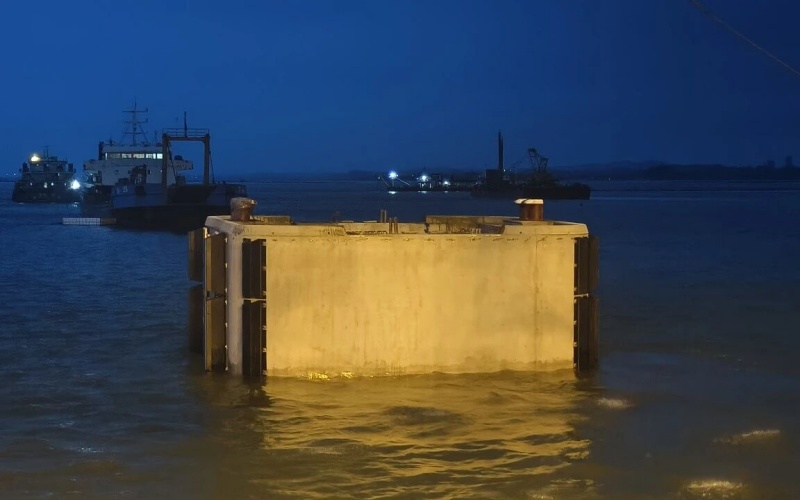
The first caisson at Anchorage No. 1 of the Pinglu Canal has been successfully installed.
The successful shipment and installation of the first caisson not only accumulated critical process parameters and practical experience for subsequent bulk lifting operations but also laid a solid foundation for optimizing tidal window scheduling and improving operational efficiency.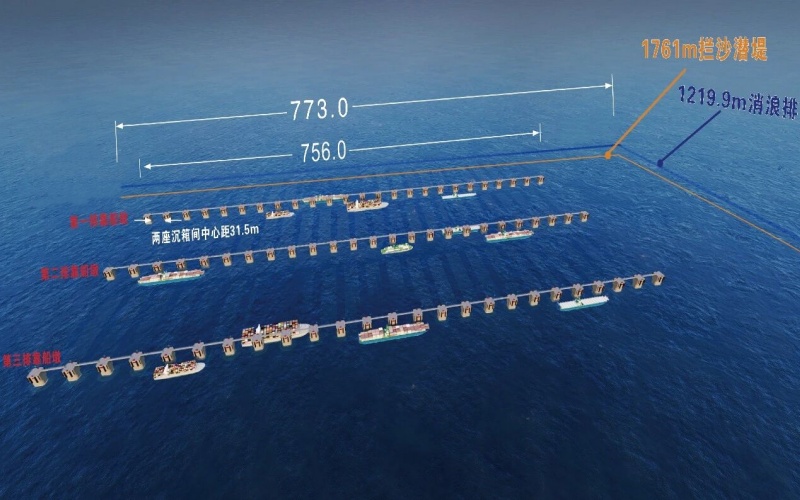
Schematic diagram of the No. 1 Anchorage Project of Pinglu Canal
Upon completion of the No. 1 Anchorage Project on the Pinglu Canal, it will be able to meet diverse needs such as berthing, formation, and waiting for locks for ships up to 5,000 tons, further enhancing the navigation efficiency and service guarantee capabilities of the Pinglu Canal.